
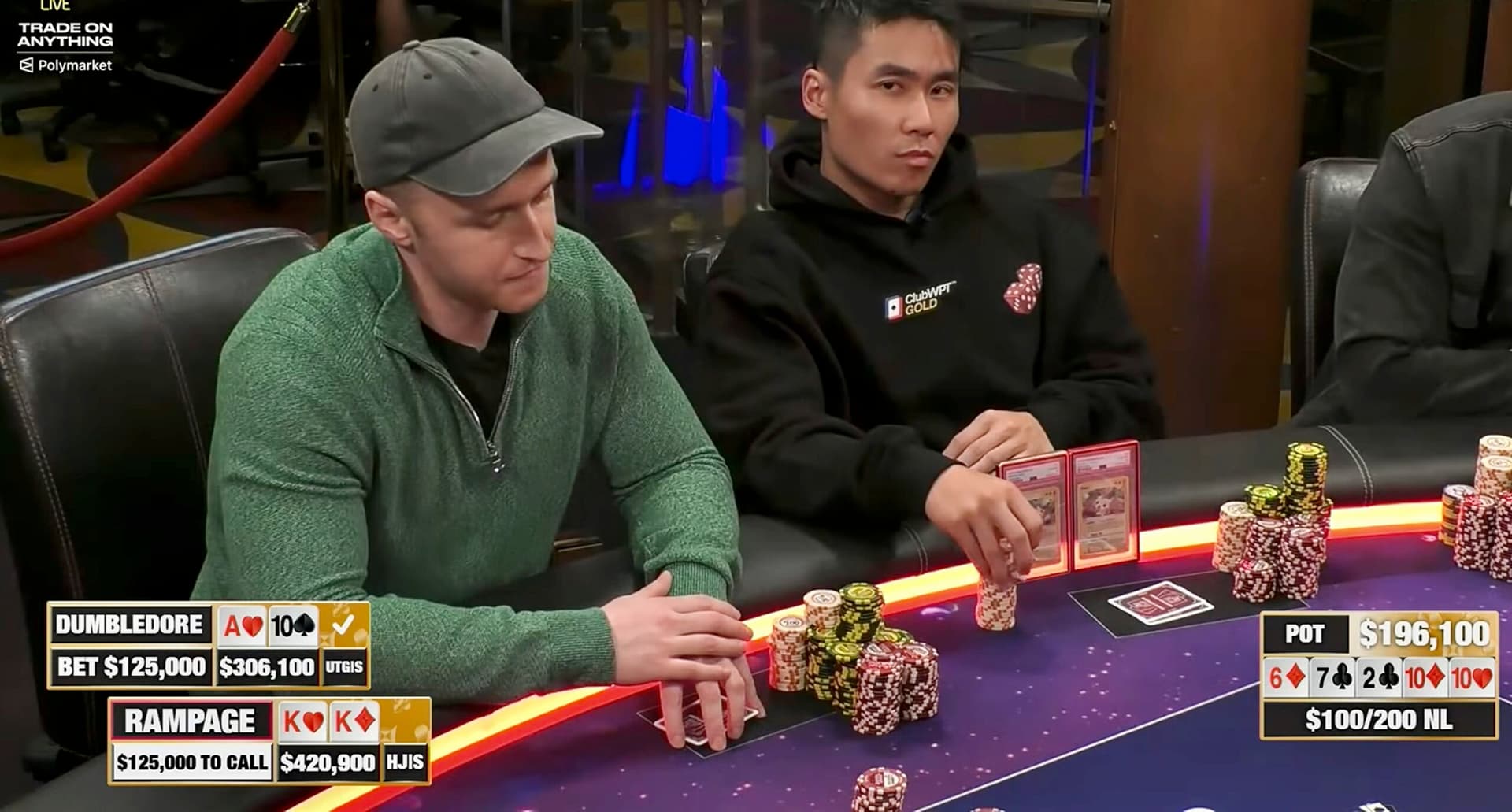
Ethan 'Rampage' Yau Loses Massive Pot in High-Stakes Poker Showdown
2 min read

Playing Pot Limit Omaha in live settings requires a different approach compared to online play. One of the key differences is the lack of table selection. In live Pot Limit Omaha, there is no table selection; players should join any available table. This is because live games often have a more varied player pool, and it's difficult to predict the skill level of players at any given table.
When joining a table, players should buy-in for 75 big blinds if less than half of the players at the table appear to be professionals. This strategy allows players to have a sufficient stack to play aggressively while minimizing the risk of being dominated by stronger players. Playing short stack by buying in for 25 big blinds and using a limp-re-raise strategy is not recommended, as it can lead to developing bad habits and a limited understanding of the game.
In Pot Limit Omaha, there are three main categories of hands to play: those collecting a nut flush, those collecting a top set, and those collecting a top straight. Hands that combine characteristics of the three categories are considered premium hands. For example, a hand like Ad Kd Ks Jh is considered premium because it has the potential to make a nut flush, a top set, or a top straight. Players should avoid hands that are not clearly defined as premium or have weak characteristics, such as hands with low cards or multiple gaps.
Share this article

By
Argus RivenI've spent years at the tables — cash and tournaments — and just as long shaping poker copy behind the scenes: room reviews, bonus fine print, tournament notes. At PokerInsider I write the way I wish more sites would: clear structure, honest trade-offs, no hype. Whether you're new or already grinding, I care about what the offer actually costs you — rake, variance, and the fine print — and I treat responsible play as part of the job, not a footnote.

