
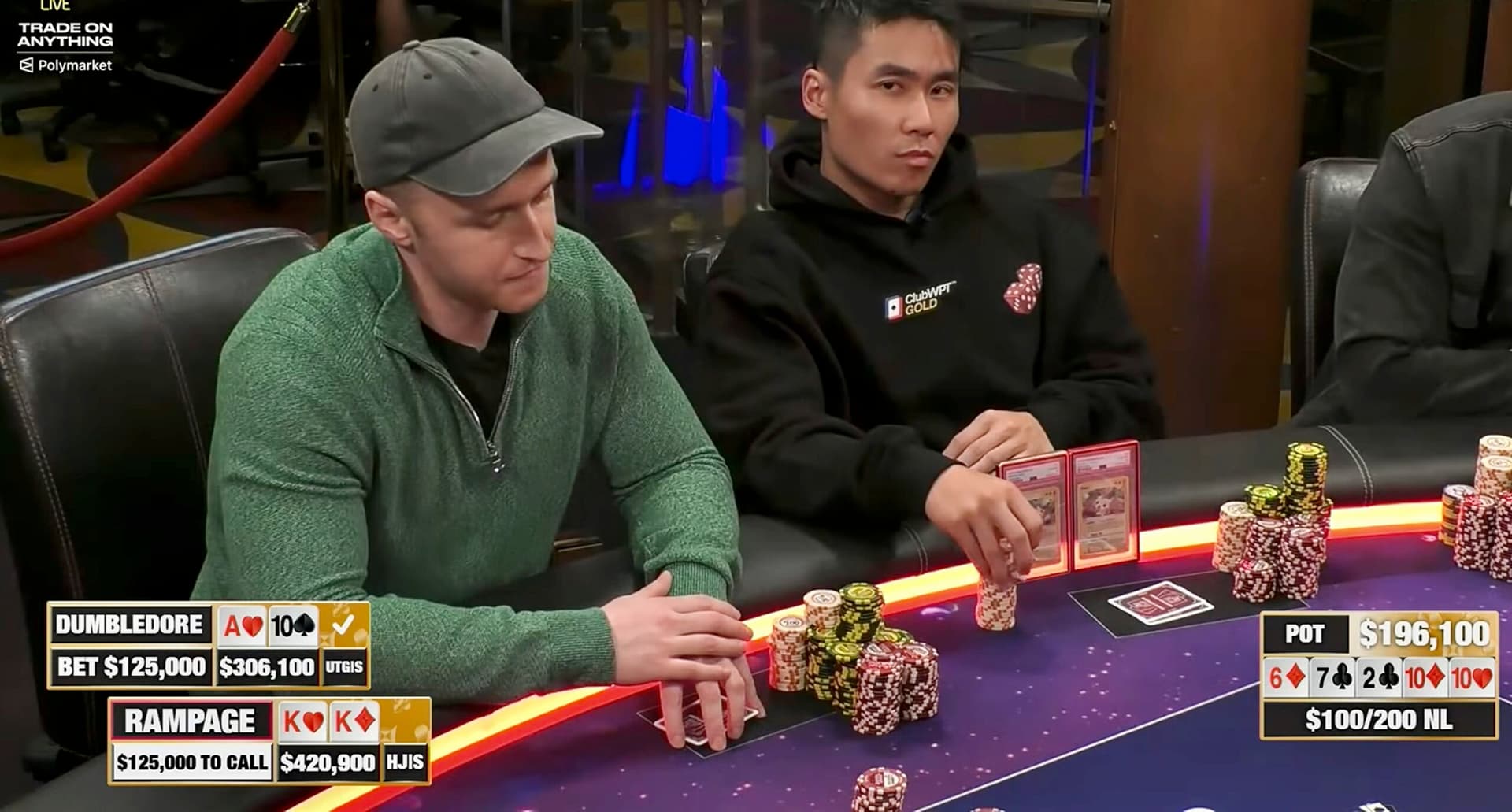
Ethan 'Rampage' Yau Loses Massive Pot in High-Stakes Poker Showdown
2 min read

The evolution of poker from a spectator sport to a live streaming phenomenon has been remarkable. The National Library of Medicine states that spectating gives us the emotional rewards of participation without the cognitive effort, stress, or risk that come with actually performing.
The journey of poker livestreaming has its roots in the early broadcasts of the World Series of Poker (WSOP) in the late 1970s and 1980s. The innovation of hole-card cameras under glass-topped tables changed everything in poker broadcasting. The British TV show Late Night Poker in 1999 was among the first to use under-the-table cameras, allowing audiences to see players’ hidden cards. The World Series of Poker and High Stakes Poker started using hole-card cameras in the table’s rail in the early 2000s. These shows brought poker into millions of homes, igniting the “Poker Boom” after amateur player Chris Moneymaker won the WSOP Main Event in 2003.
Today, Twitch and YouTube are the epicenters of poker livestreaming. Streamer Lex Veldhuis has amassed over 300,000 followers on Twitch. During the 2020 Spring Championship of Online Poker (SCOOP), Lex’s stream peaked at over 58,500 concurrent viewers, setting a record for poker streams on the platform. Similarly, Doug Polk’s YouTube channel has garnered over 350,000 subscribers, making him one of the most influential figures in poker media.
Share this article

By
Argus RivenI've spent years at the tables — cash and tournaments — and just as long shaping poker copy behind the scenes: room reviews, bonus fine print, tournament notes. At PokerInsider I write the way I wish more sites would: clear structure, honest trade-offs, no hype. Whether you're new or already grinding, I care about what the offer actually costs you — rake, variance, and the fine print — and I treat responsible play as part of the job, not a footnote.

