How to Play Poker: A Beginner's Step-by-Step Guide

Poker is a card game where you compete against other players, not against the house. In the most popular version, Texas Hold'em, every player gets two private cards, five shared cards are dealt face up in the middle, and the winner is whoever makes the best five-card hand or forces everyone else to fold. This guide explains the whole flow of a hand step by step.
The short version
- 2 to 10 players, one standard 52-card deck.
- You get 2 private cards (hole cards). Five community cards come later.
- Your hand is the best 5 cards out of your 2 hole cards and the 5 community cards.
- There are four betting rounds: pre-flop, flop, turn, river.
- You win by having the best hand at showdown, or by making everyone else fold.

Step 1: The dealer button and the blinds
A marker called the dealer button shows who is the nominal dealer. It moves one seat clockwise after every hand, so every player gets the same positions over time.
Two players must post forced bets before the cards are dealt. The player to the left of the button posts the small blind, and the next player posts the big blind. The small blind is usually half of the big blind. Blinds create a pot worth fighting for; without them, nobody would ever need to play a hand.
Step 2: Hole cards and the pre-flop round
Each player receives two cards face down. The first betting round, called pre-flop, begins with the player to the left of the big blind and moves clockwise. When it is your turn you can choose one of these actions:
- Fold: throw away your hand and sit out until the next deal. You lose any chips you already put in.
- Call: match the current bet.
- Raise: increase the bet. In no-limit games the raise must be at least the size of the previous bet or raise.
- Check: pass the action without betting. This is only possible when nobody has bet in the current round (the big blind can check pre-flop if nobody raised).
- Bet: put the first chips in on a round where nobody has bet yet.
- All-in: put all of your remaining chips in the pot.
The round ends when every player still in the hand has put in the same amount or folded.
Step 3: The flop
The dealer puts three community cards face up. This is the flop. A new betting round starts with the first active player to the left of the button. Now you can see five of your seven cards and judge how strong your hand is, and how likely it is to improve.
Step 4: The turn
A fourth community card is dealt (the turn), followed by another betting round. In many games, bets and raises are larger from this street onward.
Step 5: The river
The fifth and last community card is dealt (the river) and the final betting round takes place. After this there are no more cards to come, so you know exactly what you hold.
Step 6: The showdown
If two or more players remain after the last betting round, they reveal their cards. The player who made the last bet or raise shows first. The best five-card hand wins the pot. If two players have equal hands, the pot is split. If everyone else folds earlier, the last player left wins the pot without showing a card.
For the order of hands from the royal flush down to a single high card, see poker hand rankings.
A hand from start to finish
Say you hold A♥ K♥ and you raise pre-flop. One player calls. The flop comes K♣ 7♦ 2♠. You have a pair of kings with an ace as your side card (kicker), which is a strong hand here, so you bet. Your opponent calls. The turn is the 9♥ and the river is the 4♣; nothing changes, and you bet again. Your opponent calls and shows Q♠ Q♦, a pair of queens. Your pair of kings beats the pair of queens, so you win the pot.
Notice that your two hole cards and the board together make your hand. If the board itself contained the best five cards for you, you would "play the board" and split the pot with anyone else who also had that hand.
Betting structures
- No-limit: you can bet any amount up to all your chips. This is the standard in Texas Hold'em today.
- Pot-limit: the maximum bet is the current size of the pot (typical for Omaha).
- Fixed-limit: bet sizes are fixed by the game. It is rarer and slower to play.
Cash games and tournaments
In a cash game the chips are real money and you can sit down or leave at any time. In a tournament everyone pays an entry fee, receives the same number of chips, and plays until one player has them all; the blinds go up on a schedule, which forces action. The two formats reward different strategies. Read cash games vs tournaments before choosing.
Five mistakes beginners make
- Playing too many hands. Most starting hands are not worth playing. See starting hands.
- Ignoring position. Acting last is a big advantage. See poker position explained.
- Calling too much. Calling "just to see" costs chips; compare the price of a call to your chance of winning with pot odds.
- Bluffing without a plan. A bluff needs a story that makes sense for the cards on the board.
- Playing above your bankroll. Losing streaks are normal. Read about bankroll management.
Frequently asked questions
How many cards do you get in Texas Hold'em?
Two private cards. Five more are dealt face up in the middle, and you use the best five cards out of the seven.
Can I play poker without chips?
Yes. Use coins, matches or paper tokens, or play a free online game. What matters is that everyone tracks the same stack sizes.
What beats what in poker?
From strongest to weakest: royal flush, straight flush, four of a kind, full house, flush, straight, three of a kind, two pair, pair, high card. A full table is in the hand rankings guide.
Is poker luck or skill?
Both. In a single hand luck decides a lot. Over thousands of hands, better decisions about which hands to play, when to bet and how much to bet win more.
What to learn next
- Hand rankings: memorize the order of hands.
- Starting hands: which two cards are worth playing.
- Position: why seat matters.
- Pot odds: the basic maths of calling.
- Glossary: the poker terms you will hear at the table.
Poker is a game for adults (18+). Play only with money you can afford to lose, and check the rules in your country before playing online for real money.
Browse poker rooms → · All guides
♠Latest news on this topic
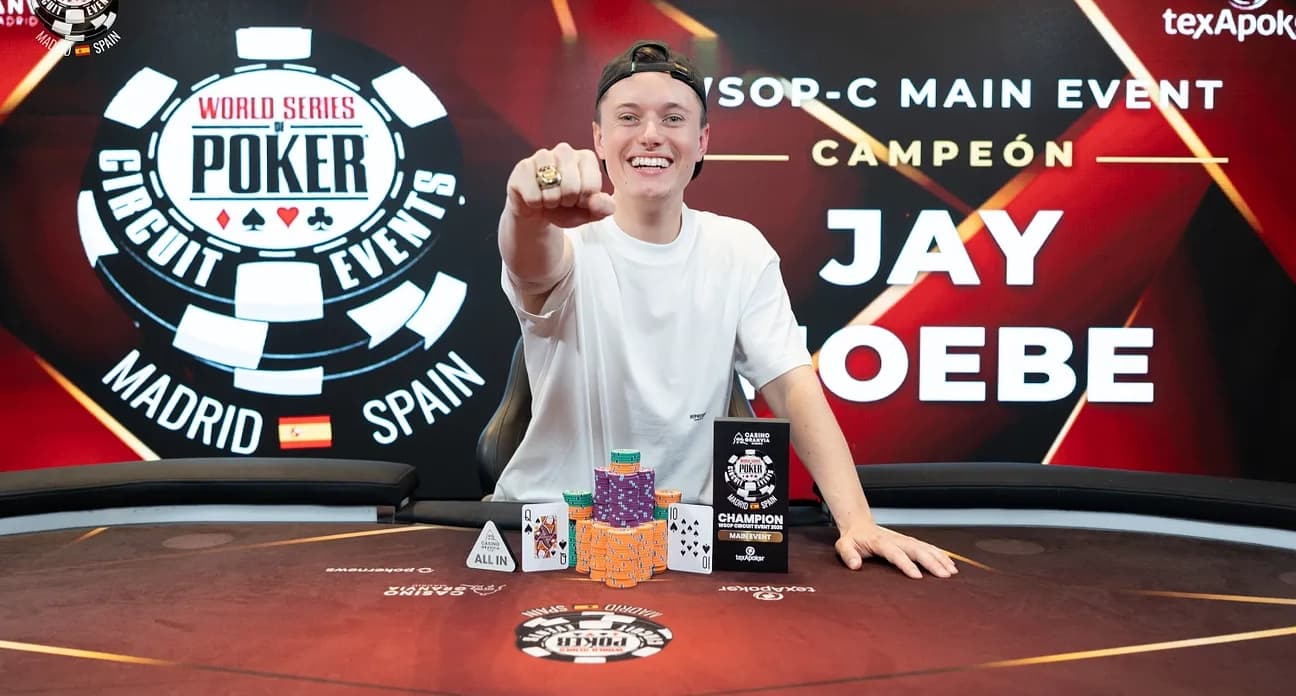
Bo Hoebe Triumphs Over Nacho Barbero in WSOP Circuit Madrid

Kraken Casino Offers Up to 440 Free Spins for Halloween
